

Watkins Glen State Park history is closely tied to the gorge: water cut through soft sedimentary rock after glaciers shaped the surrounding landscape. The gorge later became a local attraction, and its named features and guided tour connect the scenery with the park’s natural and human history.
- Location: Watkins Glen, New York.
- Gorge formation: Water flowing down glacially steepened hillsides cut into soft sedimentary rock.
- Park heritage: The glen was already an attraction in the mid-1800s and has been a village feature since the early 1900s.
- Guided tour: Approximately one and one-half hours, with history, ecology, gorge formation and geology covered.
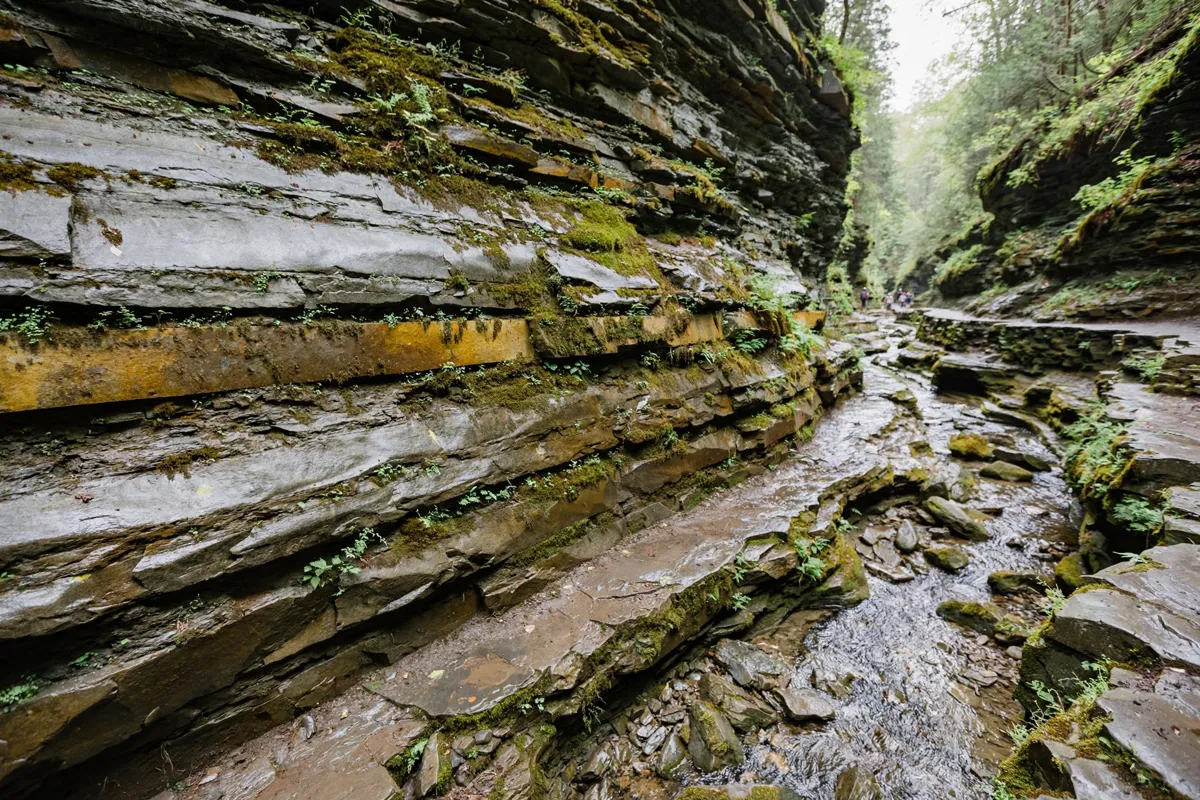
How the Gorge Was Formed
Glacial retreat and flowing water shaped the gorge and the wider Finger Lakes landscape. New York State Parks explains that water moved down glacially steepened hillsides, carrying debris that cut into the area’s soft sedimentary rock. You can see the resulting layers along the gorge walls.
About 10,000 years ago, glaciers receded north. Water filled the troughs they left behind, forming the 11 Finger Lakes. The gorge’s geology is part of that broader glacial story: the landscape was shaped first by ice, then by water working through the rock.
For more on the park’s geology, New York State Parks links to a document titled “Finger Lakes Gorge Geology.” These forces also help explain why the gorge’s falls and rock walls sit together in such a concentrated landscape.
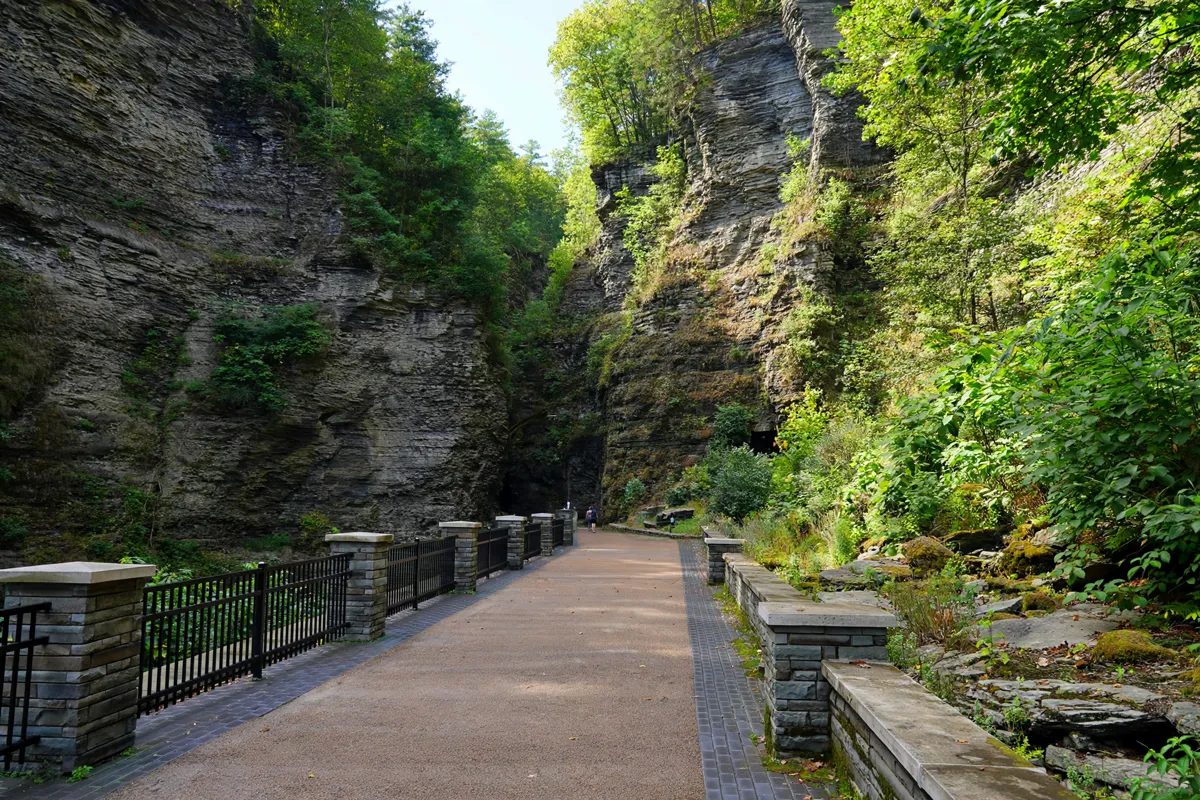
From Local Attraction to State Park
Watkins Glen was already drawing attention as an attraction by the mid-1800s, when Morvalden Ells helped build pathways and staircases in the glen. The work made it possible to move through the gorge and experience its scenery along a constructed route.
A Village of Watkins Glen comprehensive plan records the glen as a feature of the village since the early 1900s. That local connection is part of the park’s heritage: the gorge’s appeal preceded its role as a state park, and the village’s development has long been linked to it.
The falls also carry a cultural association. New York State Parks says they have been associated with the Seneca orator and warrior Red Jacket, also known as Sagoyewatha.
Watkins Glen State Park is about an 11-minute walk from Seneca Clipper Inn, a hotel in Watkins Glen.
If you are planning time in the village as well as the gorge, its commercial historic district adds another part of the local story.
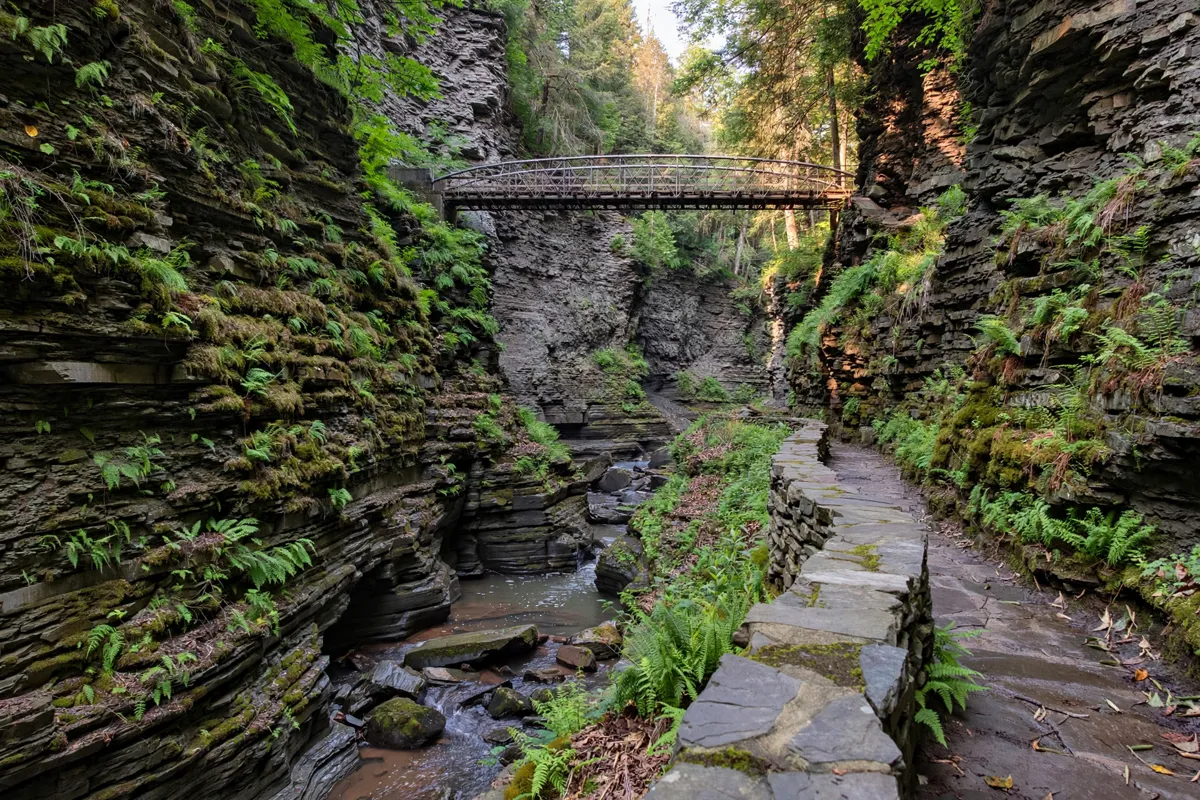
Historic Features Along the Gorge
The park’s trail map gives the gorge a sequence of named landmarks, including Point Lookout, Suspension Bridge, Lovers Lane Lookout, Glen Cathedral and Central Cascade. Farther along are Rainbow Falls, Frowning Cliff, Mile Point and Jacob’s Ladder.
These names help make the route more than a passage through the gorge: they mark places to notice as the trail moves between rock walls, viewpoints and waterfalls. New York State Parks describes its Gorge Tour as covering a mile of the gorge trail, passing through tunnels and going next to and under two waterfalls.
The area’s wider built heritage includes the Watkins Glen Commercial Historic District, which contains more than 30 historic buildings dating from 1844 to 1939, according to a New York State downtown profile. That district places the park’s history within the story of the village, where historic buildings and the gorge are both part of the local landscape.
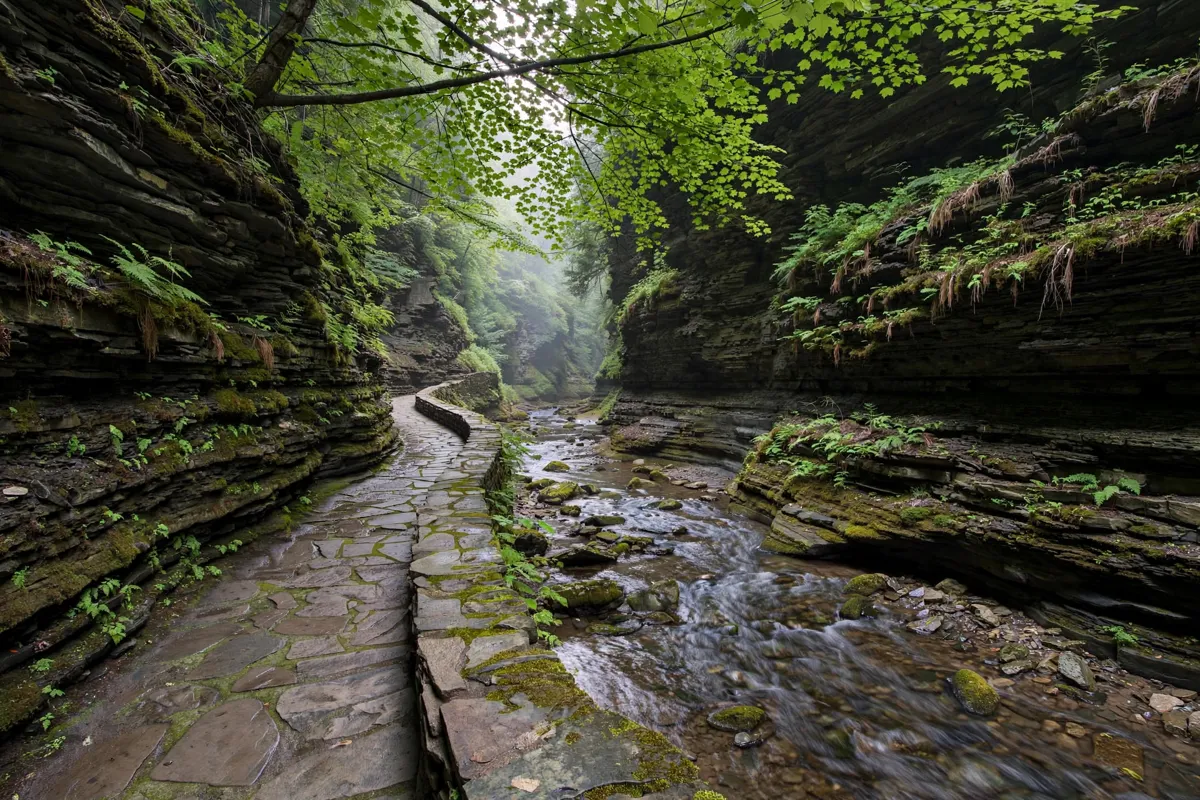
Finding Historical Information on Site
A guided Gorge Tour is one way to hear about the park’s history as you move through the landscape. The approximately one-and-one-half-hour tour covers individual park history, ecology, gorge formation and geology. You can follow the guide’s account while taking in the gorge itself.
The tour follows a mile of the gorge trail, passing tunnels and going next to and under two waterfalls. You can pair that guided account with the trail’s named features, using the landmarks to follow the route through the gorge.
For practical details about visiting, including the park’s layout, the Watkins Glen State Park visitor guide covers the park from a practical angle. Check the official site before you go.
FAQs
What shaped Watkins Glen Gorge?
Water flowing down glacially steepened hillsides carried debris that cut into soft sedimentary rock, forming the gorge.
Who helped develop pathways in the glen?
Morvalden Ells helped build pathways and staircases in the glen in the mid-1800s, when it was already a local attraction.
What does the Watkins Glen Gorge Tour cover?
The tour covers park history, ecology, gorge formation and geology while following a mile of the gorge trail.
What else can you see in the village?
You can explore the Watkins Glen Commercial Historic District, which contains more than 30 historic buildings dating from 1844 to 1939. The Watkins Glen city centre guide covers getting around and what to see there.